
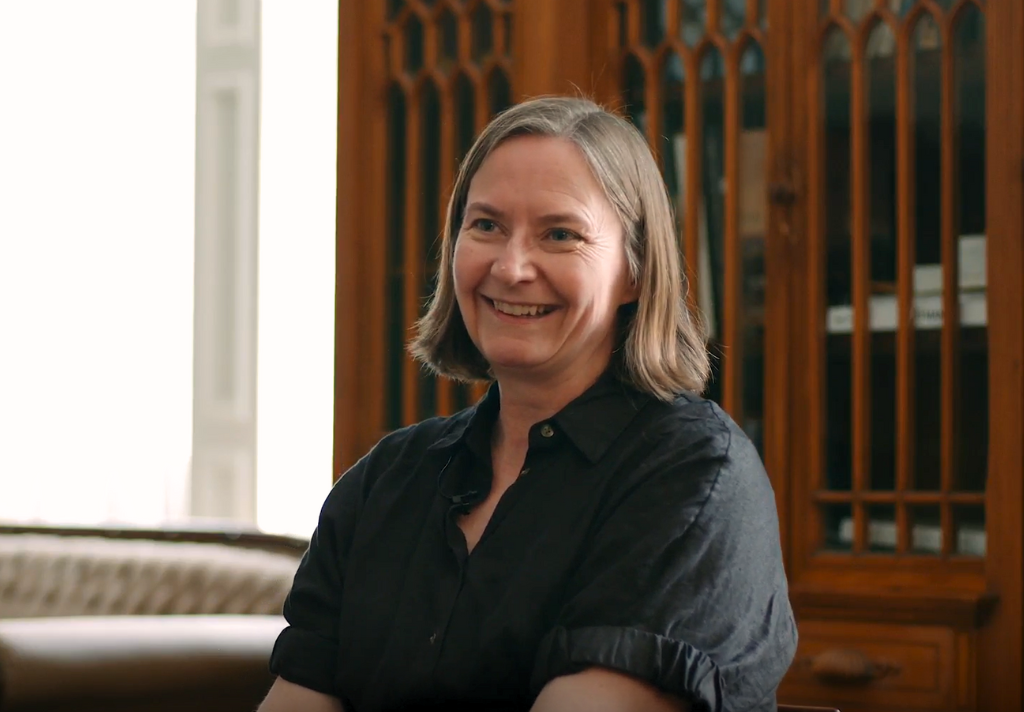
Dr. Kara Murias shares her path as a clinician-scientist and her commitment to mentorship, helping researchers connect across disciplines to strengthen neurodevelopmental research and care.
Kara Murias is a Pediatric Neurologist and Assistant Professor at the Cumming School of Medicine at the University of Calgary. As a clinician-scientist, Dr. Murias’ research is centered on understanding the processes that underlie differences in brain development across children. While advancing discoveries in neurodevelopment, her work remains grounded in her patients’ quality of life – ultimately seeking to improve clinical outcomes and support the families she sees in clinic.
She is involved in CanNRT as a Faculty Member and as Chair of the Mentorship and Membership Committee, contributing to the multidisciplinary training and professional development of future leaders in neurodevelopment.
What role do you play in the CanNRT community?
Murias: I am faculty and currently the Chair of the Mentorship and Membership Committee.
Through this role, I’ve had the opportunity to build meaningful connections and collaborate across disciplines, all within a community that shares the goal of improving the health of children.
CanNRT has expanded my network, strengthened mentorship opportunities, and provided a valuable forum to learn from colleagues approaching neurodevelopment from diverse perspectives.
Why is mentorship and community-building important in research networks?
Murias: I wanted to get involved in the CanNRT Mentorship & Membership Committee because I’ve seen how mentorship and building supportive communities around early career researchers can shape whether talented researchers stay in the field and pursue work that is meaningful to them.
By building flexible mentorship structures, I hope CanNRT can help people develop national research connections that ultimately improve the lives of children and families living with neurodevelopmental conditions.
The committee’s purpose is to make network building and mentorship deliberate and accessible for all members so that each researcher can find guidance and opportunities that match their goals and career stage.
Hear from Kara on the raison-d’être behind CanNRT’s Mentorship & Membership Committee. She highlights the importance of fostering opportunities for multi-disciplinary collaboration and mentorship in order to advance healthcare for children. (Production: Desmond Dyson)
What drew you to pediatric neurology and research on the developing brain?
Murias: I am a pediatric neurologist driven by deep curiosity about the brain—an organ that not only governs how we move and experience the world, but also constructs our very realities. I chose pediatric neurology because it is both a joy and a privilege to witness children developing these abilities, and, when possible, to help mitigate barriers that stand in their way.
Whether it is controlling seizures, supporting learning needs, or advocating for appropriate school resources, my ultimate goal is to help children reach their potential.
Research is essential to this work: despite progress, there is still so much we do not understand about the developing brain and how best to support children and families.
How does your research aim to improve care and outcomes for children?
Murias: The goal of my work is to identify what influences differences in the development of attention and executive function (fundamental cognitive building blocks for ongoing development and mental health) and work towards improving outcomes. This includes neuroimaging studies that improve our understanding of the brain, as well as clinical trials that strengthen the evidence for intervention options.
Our team investigates how key brain networks involved in attention, executive function, and emotion change over development and with interventions, helping us identify which children may benefit most from specific interventions and why.
In this webinar, Kara Murias discusses how collaboration across families, schools, and healthcare can help children with neurodevelopmental conditions thrive in the classroom. (Alberta Health Services)
Through clinical studies (including medication and neurostimulation), we aim to develop options for interfering symptoms and improve personalized care. By embedding investigations in pragmatic clinical trials and real-world clinic pathways, we hope to accelerate evidence-informed clinical decisions and that can be quickly incorporated in health systems.
Clinical Trials in Neurodevelopmental Conditions: Discussions of Gaps
Watch Dr. Murias’ guest speaker session in March 2024 for the Owerko Centre Neurodevelopmental Clinical Research Rounds.
Watch it here.
What advice would you offer to trainees and early career researchers entering the field?
Murias: Use the avenues that CanNRT offers to gain exposure to diverse advice and perspectives. This will help you reflect on how they align with your values, goals, and strengths.
The depth and diversity of viewpoints within CanNRT create an exceptional chance to be open, thoughtful, and intentional in choosing the guidance you follow.
A moment of reflection as Dr. Kara Murias encourages students to stay grounded in meaning by remembering the impact of their work on children’s care. (Production: Desmond Dyson)
I would also encourage trainees and Fellows to engage with the mentorship opportunities being developed through the Mentorship and Membership Committee. When the call for mentor–mentee pairings opens, take the time to complete the survey and share what you are looking for in a mentorship relationship. These programs work best when people participate actively and communicate their interests and goals.
For Fellows attending conferences, the CanNRT Trainee Passport can also be a helpful way to connect with other members and researchers from across the network. Sometimes a simple introduction at an event can lead to collaborations, mentorship relationships, or new ideas.
Even outside formal programs, you are always welcome to reach out. If you are looking to connect with someone in the network, our team can help facilitate those introductions.
And finally, use the spaces that exist for members to stay connected. The CanNRT LinkedIn Members Group and other channels are there for sharing publications, calls for participation, events, and opportunities, but also for asking questions and exchanging advice.
There is a real community here. Your voice, your questions, and your ideas are welcome, and we are excited to help create opportunities for those connections to grow
Looking to connect with other CanNRT members?
Join the LinkedIn Members Discussion & Mentorship Group to exchange ideas, share news, and support one another.