
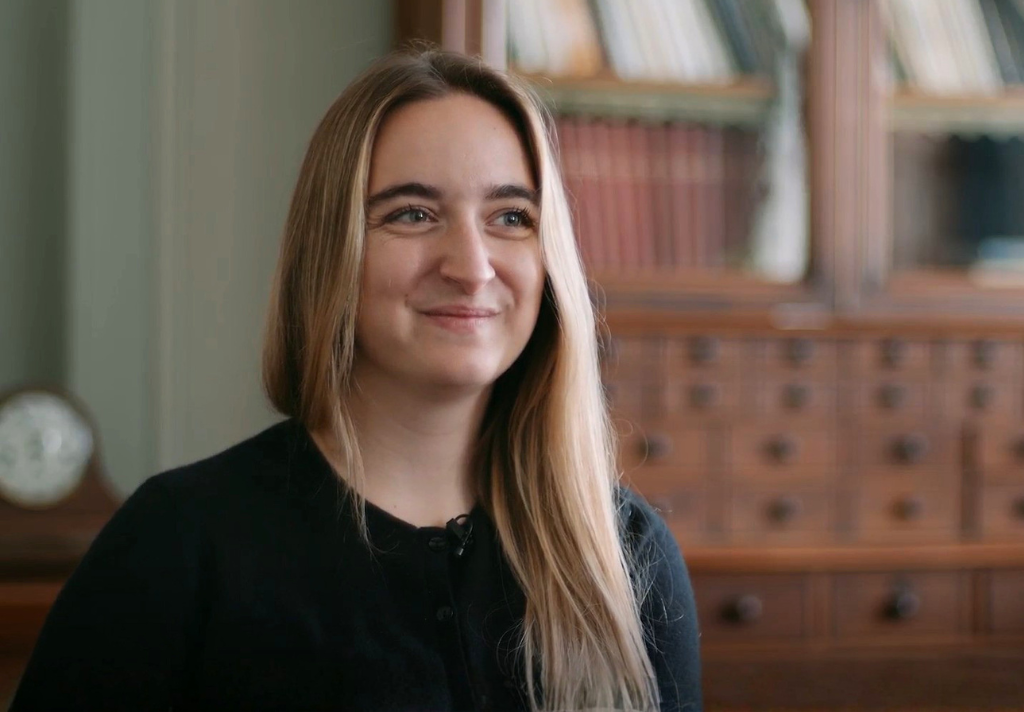
Emily Coombs is a queer autistic scholar, advocate, and PhD student in Educational Psychology at the University of Alberta, as well as a CanNRT Fellow. As a first-generation university student, her path into academia has been shaped by living and lived experience, community, and a commitment to ensuring autistic people see themselves reflected in research in meaningful and affirming ways.
Her work explores how autistic people experience relationships, identity, connection, well-being, and belonging across different areas of life. This includes her research on romantic and intimate relationships, as well as her involvement in work examining how autistic students experience postsecondary campuses as spaces of connection, accessibility, support, and exclusion.
Through her research and community engagement, Emily advocates for approaches that recognize autistic and queer individuals not as subjects on the margins, but as central voices in conversations about inclusion, quality of life, and knowledge production. Across her work, she asks what it means for autistic people to feel recognized, respected, and meaningfully included in spaces that were not always designed with them in mind.
Emily reflects on the impact of the CanNRT community in her academic journey and highlights the importance of empowering Canadian researchers (Production: Noah Leon, Moosefuel Media).
What did becoming a CanNRT Fellow represent for you personally and academically?
Coombs: I am a CanNRT fellow in the second year of my three-year fellowship.
As a first-generation university student, pursuing higher education was never something my family thought they could imagine for me. Being named a CanNRT fellow was the first time I felt truly seen as someone with a future in academia. The fellowship gave me recognition I had long hoped for, validation I had never known.
That recognition also reached my family. My grandmother proudly tells people that I am a CanNRT fellow whenever they ask about me. This fellowship has become more than a professional milestone. It has given me pride. It has given me belonging. It has given me confidence.
How have your lived experiences shaped the direction of your research?
Coombs: My motivation is rooted in my identity and lived experience. As a queer Autistic person, I know firsthand how often our voices are left out of research, policy, and community programming.
My work is driven by a desire to ensure that people from my communities can see themselves represented—not as an afterthought, but as central to knowledge production.
I aim for my research to create space for queer and Autistic individuals to feel recognized, respected, and included in ways that challenge stereotypes and improve their lived experiences.
What perspectives or experiences do you feel are often missing from autism research?
Coombs: My work focuses on amplifying the lived experiences of Autistic people, particularly in areas of life that are often overlooked, such as romantic and intimate relationships. Much of the existing research on autism and sexuality has focused narrowly on risks or deficits, which can reinforce stigma.
In contrast, my work highlights the ways Autistic people build fulfilling, supportive, and affirming relationships. By shifting the focus from risk to well-being, I aim to broaden the field’s understanding of what quality of life means for neurodivergent individuals.
This not only advances scholarship but also informs policy and practice, helping to create environments where Autistic people can thrive authentically in their personal lives and communities.
Your work looks at belonging in several different contexts, from relationships to postsecondary education. How do these areas connect for you?
Coombs: A lot of my work is connected by questions of belonging, quality of life, and what it means for autistic people to feel that they can fully participate in the spaces and relationships that matter to them.
In my work alongside Professor Heather Brown and the Autism, Neurodiversity and Academic Achievement Lab, I have contributed to research focused on autistic students’ experiences in postsecondary education. This work looks at how university campuses can be spaces of connection and support, but also spaces where autistic students may encounter barriers, exclusion, or a lack of understanding.
Get a closer look at Emily’s work
For me, this connects closely with my broader research on relationships, identity, and well-being. Whether I am thinking about intimate relationships, campus communities, or academic spaces, I am interested in how environments shape autistic people’s opportunities to feel respected, supported, and able to thrive.
This kind of research challenges institutions to move beyond simply asking whether autistic people are present. It asks whether they are meaningfully included.
What would you say to early-career researchers who may still be finding confidence or belonging in academia?
Coombs: I would encourage early-career researchers to embrace the opportunities for connection and collaboration that CanNRT offers. It is easy to feel isolated in academia, but CanNRT creates a space where interdisciplinary perspectives and shared values can come together.
“CanNRT brings us all into the room,” says Emily Coombs, highlighting the value of interdisciplinary collaboration at the CanNRT Summer School. (Production: Noah Leon, Moosefuel Media).
My advice would be to engage with peers and mentors actively, ask questions even when you feel uncertain, and let yourself be open to the recognition that you deserve to be here.
For me, learning into that sense of community has been transformative, and I believe it can be for others as well.
Connect with Emily
Connect with Emily on LinkedIn and learn more about her research through ResearchGate.