
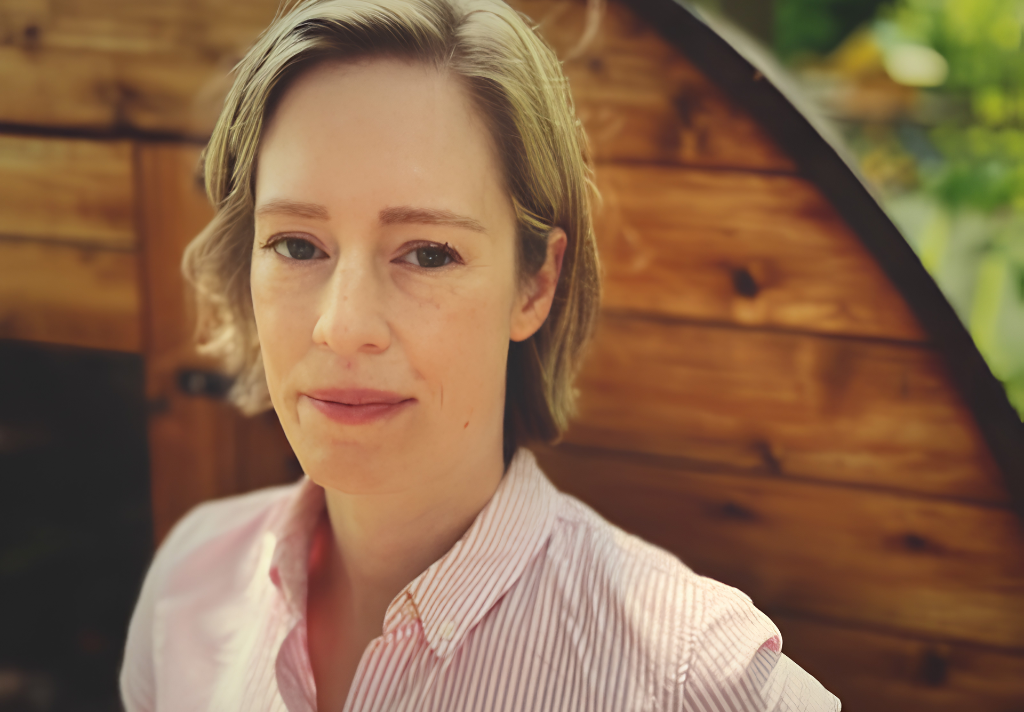
At the intersection of clinical research and technical innovation, Annemarie Wolff is exploring new ways to understand neurodevelopmental conditions through computational science. Her research asks the question: Why do people feel disconnected?
Annemarie is a 2025 cohort CanNRT Postdoctoral Fellow, based at Université de Montréal and CHU Sainte-Justine. She combines expertise in computational neuroscience, psychiatry, and quantum computing with a personal connection to her research. Her projects include investigating gender differences in autism and ADHD, as well as examining brain patterns of cognitive impairment.
We spoke with Annemarie during CanNRT’s 2025 Annual Summer School to learn more about her research journey, motivations, and advice for early-career researchers.
Meet Annemarie Wolff and learn how her research, lived experience, and interdisciplinary background shape her approach to studying autism, ADHD, and brain diversity. (Production: Noah Leon, Moosefuel Media).
What opportunities has the CanNRT Fellowship opened for you, both professionally and personally?
Wolff: As of September 2025, I am a CanNRT Postdoctoral Fellow at Université de Montréal, where this funding enables me to pursue innovative research combining normative modeling with neurodevelopmental conditions.
CanNRT has provided freedom to explore cutting-edge approaches like quantum computing applications in neuroscience while supporting my transition into computational psychiatry.
Professionally, it’s provided a Canada-wide network for collaborations and expertise development in emerging technologies with applications to neuroscience and psychiatry research.
Personally, as someone with living and lived experience of neurodevelopmental differences, CanNRT’s mission deeply resonates with my commitment to advancing understanding of brain diversity.
What drives your research and your commitment to understanding neurodevelopmental differences?
Wolff: My motivation stems from both scientific curiosity and personal understanding.
I’m driven by the fundamental question of why some people feel disconnected from their environment and how this manifests in neural activity. Having navigated neurodevelopmental differences myself, I understand firsthand the importance of this research.
My work aims to bridge the gap between subjective experiences of disconnection and objective neural markers, ultimately contributing to better diagnostics and interventions that respect neurodiversity while addressing genuine challenges.
How is your research shaping new approaches to neurodevelopmental science and supporting brain diversity?
Wolff: My research develops normative models that could serve as biomarkers for neurodevelopmental conditions, moving beyond one-size-fits-all approaches to embrace individual differences.
By identifying how temporal precision and sensory processing vary in conditions like autism, my work contributes to more personalized, brain-based mechanistic understanding of neural activity. My exploration of quantum computing applications could revolutionize complex neural data analysis.
This research has already contributed to medical technology development and may lead to more targeted, individualized interventions that incorporate neurodevelopmental diversity.
What guidance would you share with other early career researchers exploring unconventional paths?
Wolff: I would say not to be afraid of being a beginner in a new area or in pursuing unconventional ideas that excite you.
Some of my best work has come from following unconventional paths ideas.
CanNRT gives you the rare opportunity to take intellectual risks without the pressure of immediate practical outcomes.
Also, talk to people outside your specific field. I’ve learned as much from computer scientists and physicists as from other neuroscientists.
Finally, having a personal connection to your research is something to be embraced, and can get you through difficult times on your research journey.
Stay in touch
CanNRT is all about supporting connections. Reach out or learn more about Annemarie Wolff’s work through her personal website, LinkedIn, or publication list.