
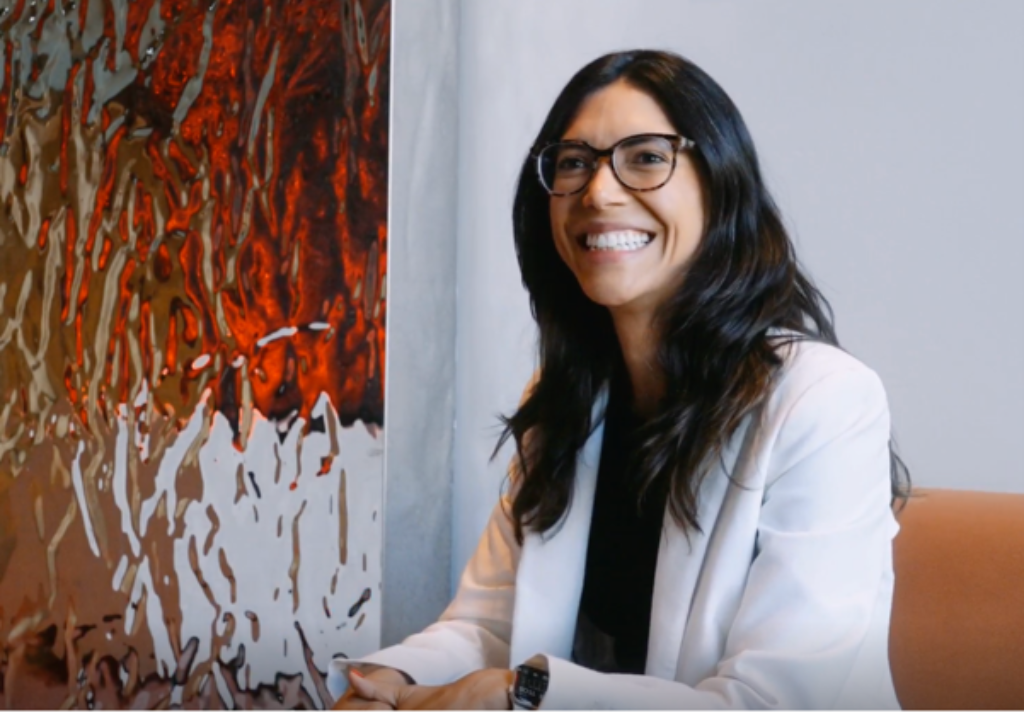
Patrícia Miguel is a postdoctoral fellow in McGill University’s Department of Psychiatry, working under the supervision of Dr. Patricia Pelufo Silveira. Her research explores how genetic and environmental factors interact to shape the development of executive functions, including attention, planning, decision-making, and emotional regulation.
Rather than looking at these influences in isolation, Patrícia studies how they work together and why similar experiences may affect children differently. Her goal is to help identify which children may benefit from earlier or more tailored support.
We spoke to Patrícia during the 2025 CanNRT Summer School in Montreal about her research, the value of learning from different perspective and her advice for other early-career researchers.
Filmed at the 2025 CanNRT Summer School, this video captures Patrícia Miguel’s reflections on learning alongside people from different backgrounds and connecting research with practice and community needs. (Video: Noah Leon, Constance Dollet).
What did you take away from meeting and learning alongside researchers from different backgrounds at the CanNRT Summer School?
Miguel: I joined the 2025 CanNRT Fellows cohort and recently attended the CanNRT Summer School in Montreal. This experience provided me with the opportunity to learn more about clinical research in the neurodevelopmental field and to participate in workshops that enhanced both my research and professional skills. Just as importantly, I was able to connect with fellows from diverse backgrounds, which broadened my perspective and created a network for future collaborations.
Why are you interested in how executive functions develop?
Miguel: My motivation lies in understanding the environmental and genetic factors that shape executive function development, as impairments in these skills are highly prevalent among individuals with neurodevelopmental conditions. By identifying early predictors of risk, my goal is to facilitate the development of targeted interventions that can be implemented in childhood, maximizing their long-term impact.
Why is it important to consider genetic and environmental factors together?
Miguel: This approach moves beyond single-factor explanations toward precision models that identify which children are most vulnerable and who are most likely to benefit from specific interventions. In the long term, this research could inform early screening tools, guide tailored interventions, and ultimately reduce the burden of neurodevelopmental conditions for individuals, their families, and the community.
What advice would you share with other early-career researchers?
Miguel: Be curious and open to ask questions, engage actively with other early career researchers, and share not only your projects but also the challenges and successes along the way. Take advantage of this unique opportunity to connect with researchers who bring diverse perspectives, as these interactions can help you think more broadly and strengthen your own work.
Stay connected
Learn more about Patrícia’s research through her ResearchGate profile and Google Scholar publications, or connect with her on LinkedIn.