

CanNRT Fellow Mishel Alexandrovsky entered autism research with a clear question shaped by her own lived experience: Why do so many scientific tools fail to capture how autistic people think and make sense of the world? This question guides her work as a PhD student at the University of Toronto and research trainee at the Centre for Addiction and Mental Health (CAMH).
Her work sits at the intersection of lived experience, scientific inquiry, and methodological reform. As an autistic researcher, she is part of a growing movement calling for research informed by autistic perspectives and grounded in real-world contexts. She studies experimental tasks commonly used in autism cognition research and examines how well they reflect autistic ways of thinking and processing information. Her goal is to strengthen scientific validity while advancing a more accurate and respectful understanding of autistic cognition.
Mishel’s leadership extends beyond her research. She also serves as a trainee co-lead on CanNRT’s Review and Selection Committee, working alongside trainees and mentors to help shape the program’s review processes and broader research conversations.
Mishel Alexandrovsky reflects on her late diagnosis, her path to understanding herself, and how these experiences shape the way she contributes to research and community. (Production: Desmond Dyson)
How did you first get involved with CanNRT?
Alexandrovsky: I am involved in CanNRT as a fellow, which has provided me with invaluable opportunities to collaborate with a national network of experts in neurodevelopmental and autism research.
This involvement has allowed me to expand my professional connections across disciplines, gain exposure to diverse research methodologies, and participate in projects that emphasize interdisciplinary collaboration.
Being part of this network has also helped me stay informed about emerging trends and best practices in the field, which has strengthened both my research skills and my understanding of how to apply findings in meaningful, real-world contexts.
What motivates your research?
Alexandrovsky: My motivation stems from my personal experiences being misunderstood as an autistic person, personally and scientifically. These experiences have shaped my commitment to ensuring that research reflects the lived realities of autistic and neurodivergent individuals.
I am particularly driven to bridge gaps between experimental research and the everyday experiences of those being studied, so that findings are not only scientifically rigorous but also relevant, accessible, and beneficial.
Ultimately, my goal is to produce research that empowers neurodivergent communities, informs practice, and encourages a more nuanced understanding of autism within both academic and public spheres.
How do you see your work influencing the field?
Alexandrovsky: My work contributes to the field by critiquing and revising experimental tasks used in autism research, aiming to improve the validity and inclusivity of these measures.
By refining tasks that are often misaligned with participants’ lived experiences, my research helps generate more accurate and meaningful data, which can inform clinical practice, intervention design, and policy development over time.
Ultimately, this approach seeks to enhance scientific understanding to improve the quality of life for people with neurodevelopmental conditions.
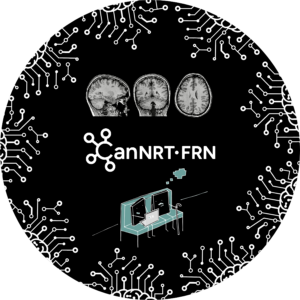
Mishel’s winning design in the 2025 CanNRT sticker competition reflects how collaboration across disciplines strengthens both the science and the community. “This sticker represents the multifaceted and collaborative spirit of the CanNRT Fellowship. When we bring different ways of thinking together, we push our work further and support each other in the process.” Read the full story
What would you say to early career researchers entering this field?
Alexandrovsky: I would advise early career researchers to actively engage with the CanNRT network by attending workshops, participating in discussions, and connecting with both peers and mentors.
It is important to take advantage of opportunities to contribute to collaborative projects, share your perspective, and learn from others’ expertise. Engaging deeply with the network not only helps you grow professionally but also provides a broader understanding of the field and its real-world impact.
Immersion in this community can enrich your research, expand your collaborations, and help you make meaningful contributions to neurodevelopmental research.
Connect with Mishel
Keep up to date with Mishel’s work by connecting with her via Bluesky, LinkedIn, X, and Google Scholar.