
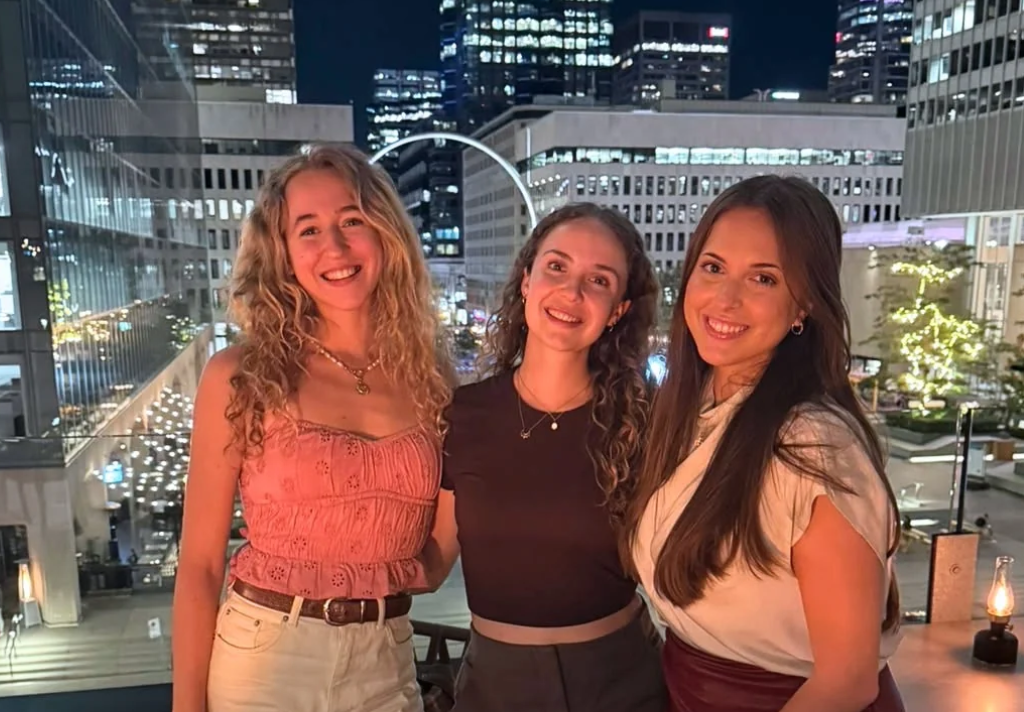
Through a partnership between CanNRT, TACC and GIS Autisme et TND, three emerging researchers crossed borders to exchange knowledge, build connections and discover new perspectives on neurodevelopmental research.
For Anna Katalifos, Julie Chaudet and Claire Sendra, the 2026 international exchange offered more than an opportunity to attend scientific events abroad. It brought them into contact with researchers, mentors and community members whose experiences and perspectives offered new ways of thinking about their work.
In August, Julie and Claire travelled from France to Montréal for the CanNRT Summer School. In October, Anna, a CanNRT and TACC trainee member from McGill University, travelled to Paris for the GIS Autisme et TND Young Researchers Mentoring Afternoon and Annual Conference.
Discovering new perspectives in Montréal
For Julie and Claire, the Summer School offered an opportunity to learn beyond their respective research fields, exploring topics ranging from genetics and brain imaging to clinical research, policy and lived experience.
For Claire, whose research focuses on the microbiota-gut-brain axis, one conversation was particularly meaningful. While speaking with a clinical researcher, she discovered they were exploring a similar scientific question from different perspectives, opening the possibility of future collaboration.
Julie, who studies neurobiological mechanisms associated with autism, was struck by the range of disciplines represented and the importance of learning from researchers working outside her own field.
“Being part of such a diverse research network was incredibly valuable. It showed me how important it is to understand the different methods and approaches being used to study neurodevelopmental conditions,” she reflected.
Both researchers also highlighted an activity at the Montreal Museum of Fine Arts, where they connected with autistic community members and caregivers. The experience encouraged them to reflect on the diversity of lived experiences and the importance of bringing different perspectives into research.
The exchange also brought an unexpected connection. Although Julie and Claire both conduct research in France, they had never met before travelling to Montréal.
For Claire, the experience reinforced how much scientific development happens through relationships and collaboration.
“I realized how important it is to be part of a professional network, and how much these connections contribute to our growth as researchers,” she shared.
Watch the interview: Julie Chaudet and Claire Sendra reflect on their experience at the 2026 CanNRT Summer School.
Finding inspiration and connection in Paris
For Anna, the GIS Autisme et TND meetings offered a similar opportunity to connect with researchers working across disciplines, from biomedical science to education and lived experience.
One moment stood out in particular.
During the conference, Anna learned that several established researchers and clinicians were also parents of autistic adults. As a caregiver to her younger brother, an autistic young adult, she found these shared experiences especially meaningful.
“Connecting with these role models so early in my career was highly motivating for me, and I left feeling truly inspired.”
Anna also returned with new professional connections and a greater appreciation for the value of meeting researchers and mentors in person.
“Trainee exchange programs such as the CanNRT-Autisme et TND initiative offer an invaluable way for students to connect with their peers and potential mentors face-to-face.”
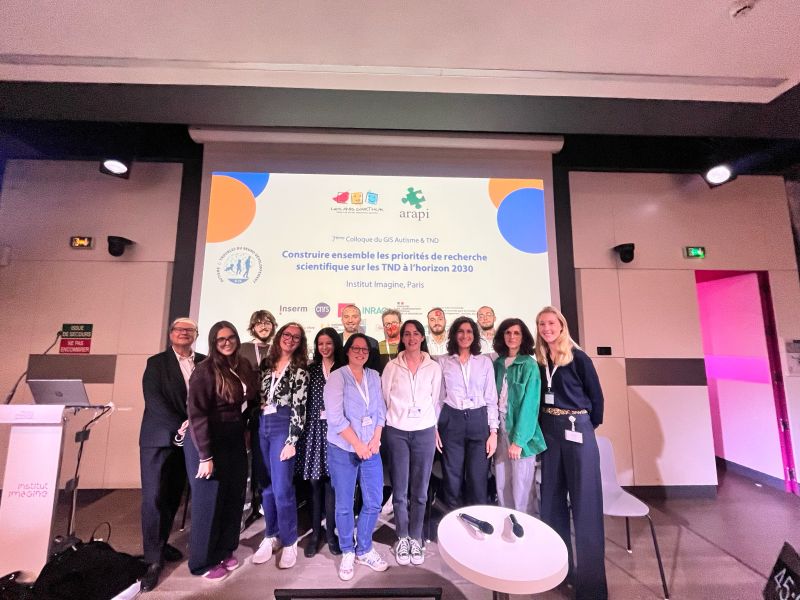
Anna Katalifos (second from the left) at the GIS Autisme et TND Conference in Paris (2026)
Building connections beyond the exchange
For all three researchers, the experience reinforced the importance of learning from people outside their usual academic environments.
Their reflections also point to possibilities for future collaboration, including continued exchanges, research placements and opportunities to connect emerging researchers across international networks.
Through their ongoing partnership, CanNRT, TACC and GIS Autisme et TND are creating opportunities for researchers at an early stage of their careers to learn from one another, build relationships and bring new perspectives back to their work.
For Anna, Julie and Claire, those connections are among the most meaningful things they brought home.