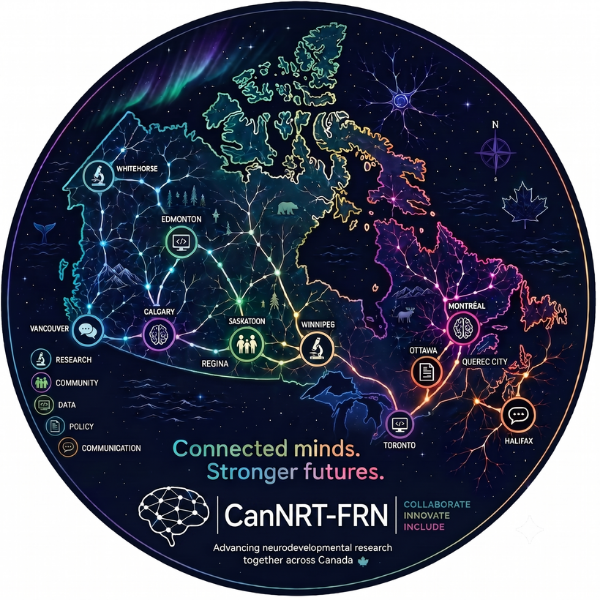
What does CanNRT mean to the people who are part of it?
This year’s CanNRT Sticker Competition invited Fellows and Trainee Members to answer that question through design. The result was four interpretations, each offering a personal perspective on what it means to belong to a national training community.
While every design is unique, common themes quickly emerged.
Across the submissions, participants highlighted the importance of collaboration. They saw CanNRT as a place where trainees, researchers, clinicians, community partners, and people with lived and living experience learn from one another and work toward shared goals.
Several designs emphasized connection across Canada. Whether through maps, networks, or shared symbols, contributors reflected on the value of belonging to a bilingual, pan-Canadian community that brings together people with diverse backgrounds, disciplines, and experiences.
Others focused on learning. Books, knowledge sharing, and scientific discovery appeared alongside playful and welcoming imagery, reflecting the curiosity that drives research and the supportive environment that helps trainees grow throughout their careers.
Diversity was another thread woven throughout the designs. Contributors represented the many perspectives, strengths, and experiences that shape neurodevelopmental research today, while recognizing that progress depends on bringing those perspectives together.
Together, these submissions remind us that CanNRT is more than a training program. It is a community built on relationships, shared learning, and a commitment to advancing research that is informed by many voices.
2026 Winning Design
Following a vote by CanNRT Fellows and Trainee Members, MacKenna Jardine has been selected as the winner of the 2026 CanNRT Sticker Competition.
All four contributors will have the opportunity to showcase their designs at this year’s Annual Summer School, celebrating the creativity and shared values that bring our community together.
Discover the stories behind all four designs:
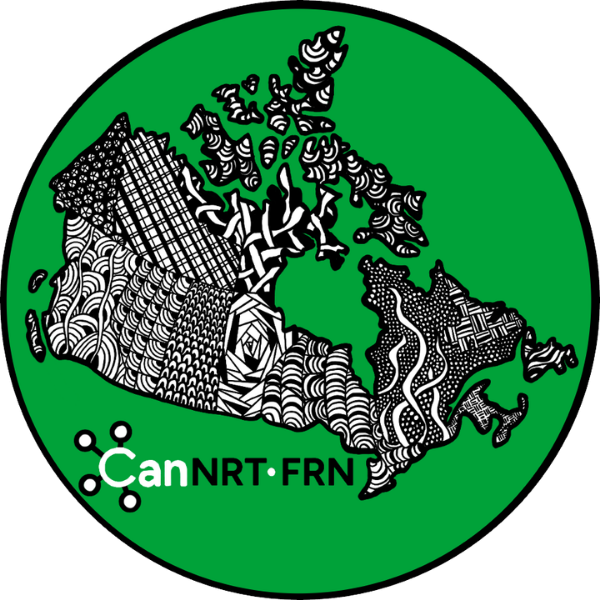
MacKenna Jardine – WINNER!
University of Calgary
I chose to draw Canada because what stands out most to me about CanNRT is its uniquely Canadian network. It brings together researchers, people with lived and living experience, and community partners from coast to coast. The different zentangle patterns across the map represent the diversity of people connected through this network. They also symbolize the diversity of neurodevelopmental conditions themselves—complex, varied, and unique. To me, CanNRT’s strength lies in embracing this diversity and creating connections among people with different experiences, perspectives, and expertise across the country.
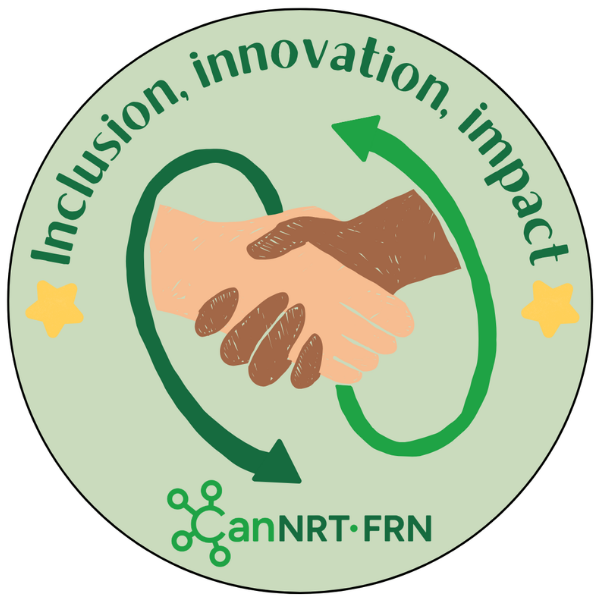
Marie-Jane Robitaille
Université du Québec à Trois-Rivières
My sticker highlights the bilingual CanNRT-FRN logo and uses words that are read and written the same way in French and English, reflecting the unity of the network and allowing it to be shared across the country.
The handshake symbolizes mutual support, an essential value that I associate with CanNRT. The circular arrows represent the ongoing sharing of knowledge, experiences, and perspectives between researchers and communities. The message I want to convey is simple: by working together, we create stronger, more innovative solutions that are meaningfully adapted to the diverse realities of communities.
Suhantee Sathananthan
McGill University
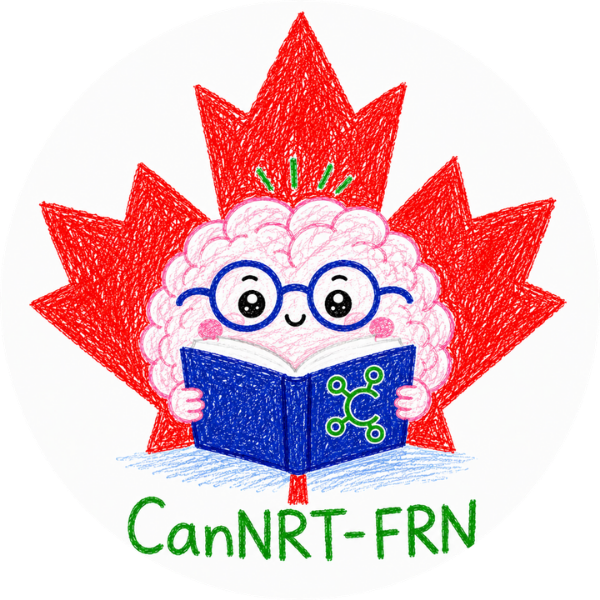
My vision was to create a warm and playful sticker that reflects CanNRT’s commitment to advancing neurodevelopmental research while inspiring curiosity and hope. As a pediatric occupational therapist, I wanted the design to feel approachable, and child-friendly. I was inspired by the idea that every scientific discovery begins with learning and collaboration. The smiling brain and open book featuring the CanNRT logo represent neurodevelopment, research, learning, and collaboration. The Canadian maple leaf reflects CanNRT’s national network and its commitment to diversity, equity, and inclusion, improving the lives of children, youth, and families. Together, they inspire brighter futures in our communities.