
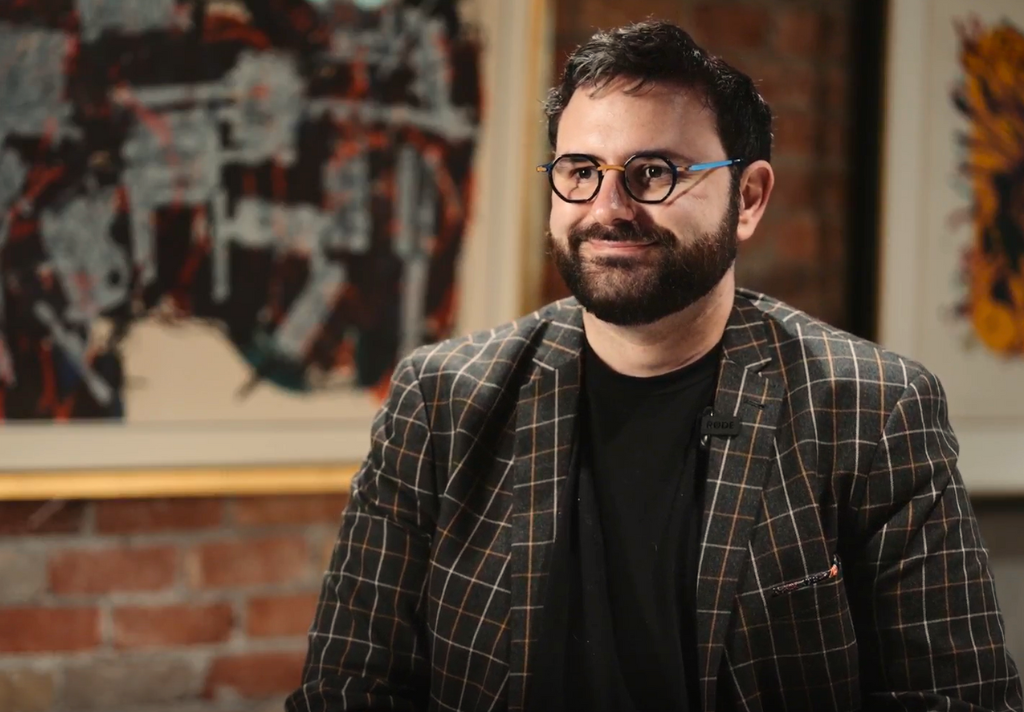
Samuel Ragot, a PhD Candidate at the School of Social Work at McGill University and 2024 CanNRT Fellow, focuses on issues that matter in everyday life: financial security, inclusive employment, and wellbeing. His research weaves together evidence, advocacy, and community insight, always with an eye on how policies and practices can shift toward equity and inclusion.
We met Samuel at the 2025 CanNRT Annual Summer School, where he shared how the fellowship has shaped his path and why connecting across disciplines has been so meaningful.
Watch CanNRT Fellow Samuel Ragot share his vision for strengthening mentorship, exchange, and peer learning—keeping trainees at the heart of the CanNRT community. (Video: Noah Leon, Desmond Dyson)
How are you involved in CanNRT?
Ragot: I am a CanNRT 2024 cohort fellow. So far, my involvement in CanNRT has provided me with the chance to collaborate with an interdisciplinary community of researchers, trainees, and partners who share a commitment to advancing neurodevelopmental research.
Being part of this network has expanded my perspective beyond my own disciplinary lens and allowed me to exchange knowledge across diverse approaches.
Professionally, this has opened pathways for collaboration. Personally, it has offered a sense of connection to a community that values both rigorous scholarship and meaningful impact in people’s lives.
What motivates you?
Ragot: I am motivated by a strong belief that research should not only generate knowledge but also translate into meaningful change.
My work is rooted in understanding how policies, systems, and community practices shape the opportunities and experiences of people with neurodevelopmental conditions and their families.
What drives me is the possibility of bridging evidence, advocacy, and lived experience to create environments that are more inclusive, equitable, and responsive to real needs.
How is your work advancing the field of neurodevelopmental research?
Ragot: My research program really is about three main components:
- The financial security of people with disabilities in general;
- Inclusive employment for people with developmental disabilities; and,
- Caregiver wellbeing.
Those areas of research can all improve the lives of people with neurodevelopmental conditions in general.
Watch CanNRT Fellow Samuel Ragot discuss his research on financial security, employment, and peer support for people with disabilities, inspired by his lived experience and commitment to equity and social justice. (Video: Noah Leon, Desmond Dyson)
What advice do you have for early career researchers?
Ragot: As a person whose day-to-day job is in public policy, I would encourage early career researchers to engage actively and intentionally with the network to expand their views and understand the interconnected nature of all our research and policy-making processes.
The value of CanNRT lies in its interdisciplinarity—lean into that by connecting with colleagues outside of your field, sharing your work early, and remaining open to perspectives from both academic and community partners.
Think of CanNRT not only as a platform to showcase your research, but as an opportunity to broaden your vision of how scholarship can connect to systems, policy, and lived experience. The more you invest in those relationships, the more you will discover how the network can shape both your research trajectory and your sense of purpose in this field.
Stay in touch
Interested in Samuel’s work or want to connect? Check out his publications, and stay connected with him via LinkedIn and X.
Learn more about the CanNRT Fellowship via our webpage.